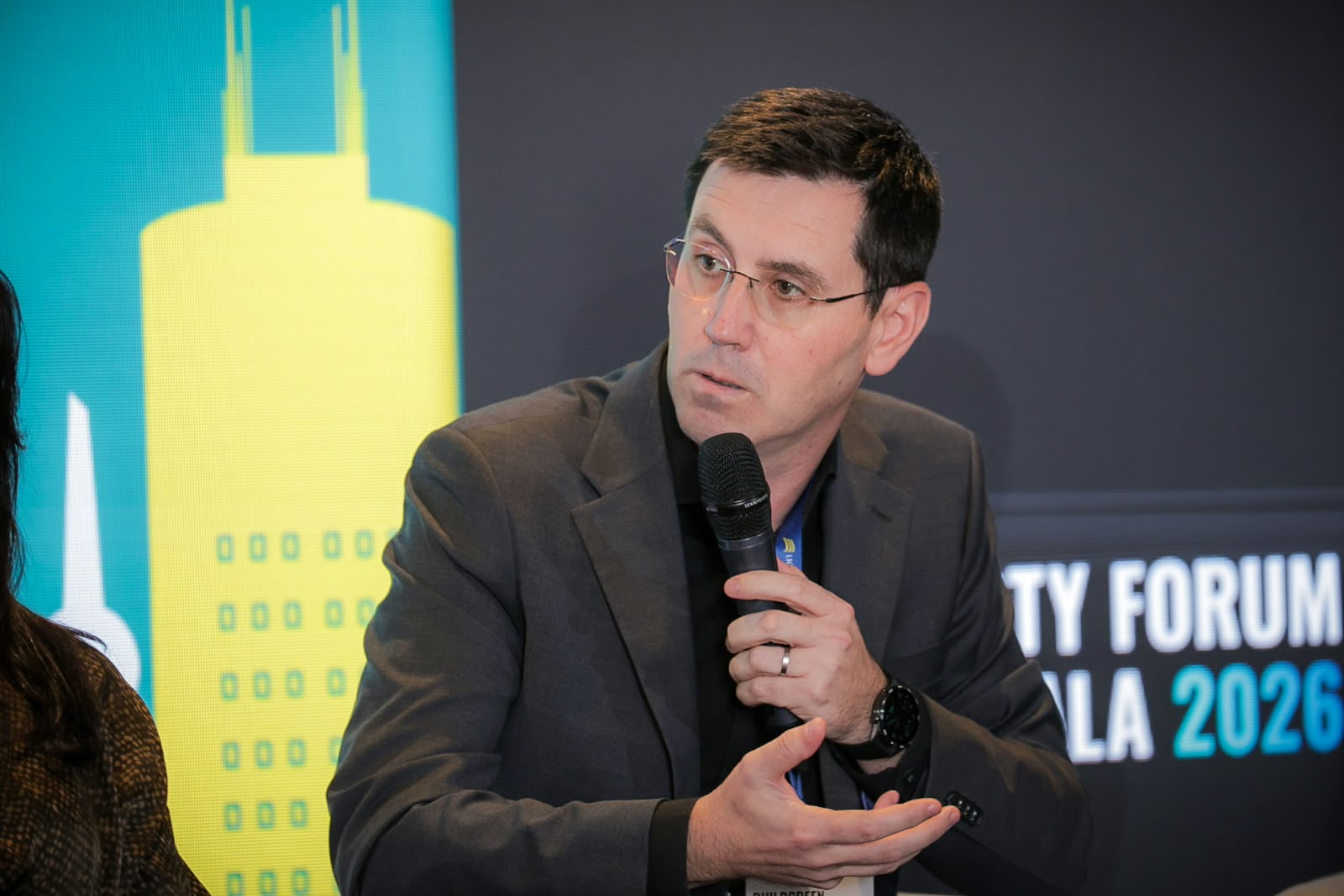
At the ZF ESG Summit 2026, held on May 12 at the JW Marriott Bucharest, Răzvan Nica, CEO and founder of BuildGreen, joined a cross-sector panel on a question the real estate industry can no longer avoid: Where does authentic ESG begin, the kind that actually changes how assets are built, operated and valued?
The panel brought together voices from food manufacturing, sustainable packaging, environmental NGOs and social enterprise, a deliberately broad mix that made the conversation more demanding.
The line between PR and performance
Răzvan opened with a distinction that has shaped BuildGreen's work for nearly two decades. Authentic ESG begins at the moment it moves beyond communications and becomes integrated into management, operations and measurable business efficiency.
"Companies have been built and continue to operate with a long-term horizon, which by definition requires an embedded ESG component," he noted. The problem, in his view, is not intent but integration. When sustainability remains a reporting exercise rather than an operational discipline, it produces documents, not performance.
For the built environment, this is a familiar tension. Green certifications were, for many years, primarily positioning tools. What changed, and what BuildGreen has tracked closely across the Romanian and European markets, is that performance has become financially legible. The buildings that demonstrated real resilience during the 2022 energy crisis were not those with the strongest sustainability narratives, but those where efficiency had been designed in, commissioned properly and tracked continuously through operation. The market learned, in real time, what performance actually means.
Benchmarking or knowing where you stand
Having a number is the starting point. Understanding it requires context. Where does a building sit relative to comparable assets, similar operations, sector peers? BuildGreen addresses this through an industry benchmarking layer that gives organisations a reference point before they set targets. The progression Răzvan described is structured and realistic. First, reach or approach the industry average, then align with tenant requirements or applicable international standards, then build a credible decarbonisation plan with emissions scenarios over a longer horizon.
For asset owners and managers, this sequence matters. Targets set without benchmarking tend to be either too conservative to drive change or too ambitious to be credible with investors and lenders. Grounded targets, by contrast, anchor ESG commitments to operational reality, which is increasingly what the market requires.
The challenge of historical data
Closing the session, Răzvan identified the most underestimated technical challenge for organisations serious about decarbonisation, namely the depth of historical data.
"With data from only one year, it's insufficient to understand the dynamics," he said. To build reliable predictions on energy consumption, emissions trajectories, the influence of external variables like temperature fluctuations across seasons, organisations need at minimum four to six years of operational history. The longer the data series, the more accurate the forecast and the smaller the margin of error.
In the built environment, where assets operate for decades, this has a clear implication. The buildings that will retain value, attract institutional capital and meet future financing criteria are not those that will begin measuring when a regulation demands it. They are the ones whose owners are collecting, structuring and acting on performance data now, building the evidential base that will define asset quality in the years ahead.