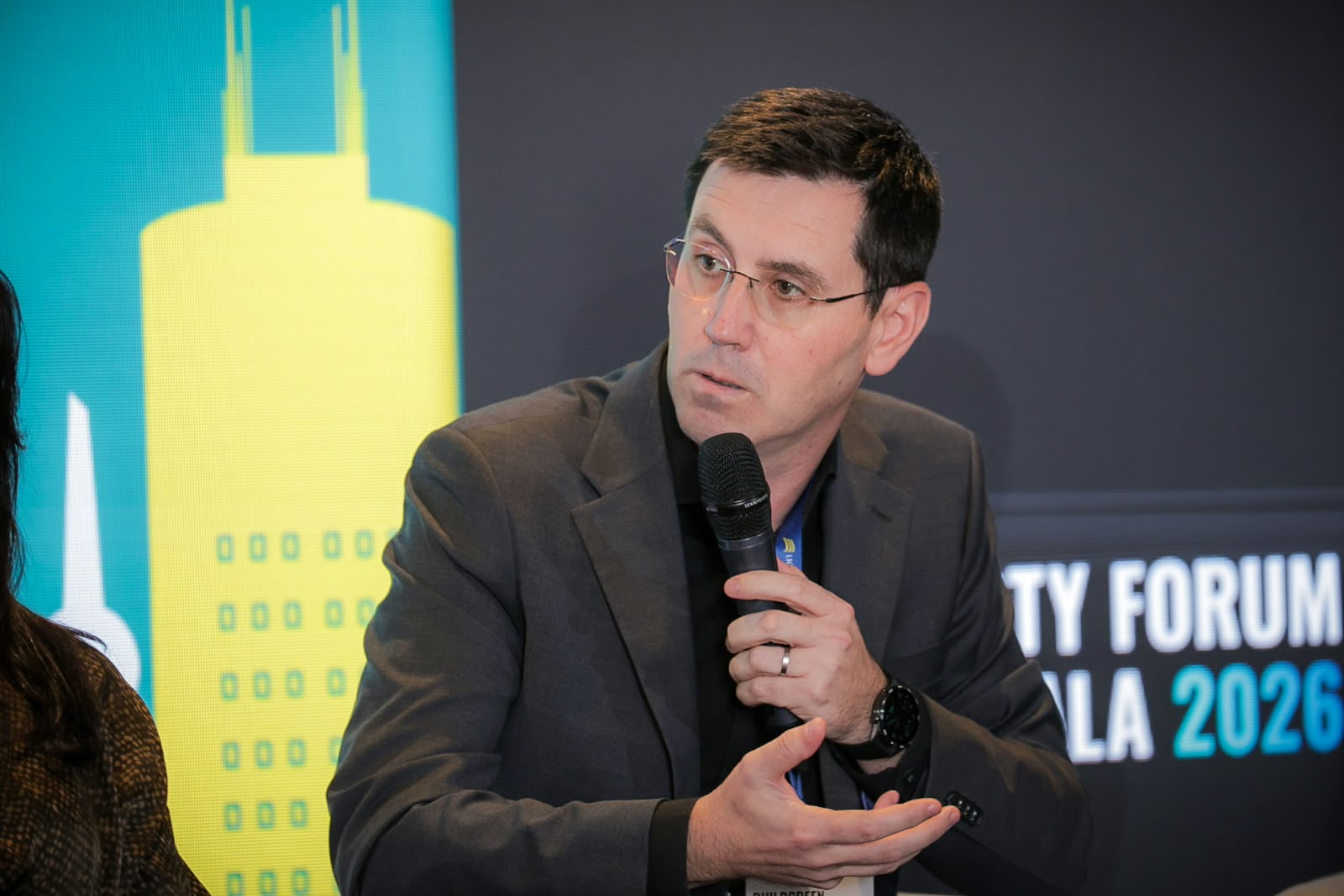
Răzvan Nica, CEO & Co-Founder of BuildGreen and CarbonTool, spoke to Business Mark about the structural shift behind green building standards and what it means for the market in 2026.
Over sixteen years in sustainable building consultancy, Răzvan Nica has watched the market transform from one driven by reputation to one driven by financial risk. In a recent interview with Business Mark, he outlined the forces reshaping real estate in Romania and the price of standing still.
From differentiation to market entry requirement
When BREEAM and LEED certifications first arrived in Romania in 2010-2013, they were competitive advantages. Today, they are baseline expectations. The shift, Răzvan Nica explains, was not driven by local conviction but by international capital, as institutional funds and investors imposed minimum standards, and banks began linking financing to energy performance. European regulations, from nZEB to the EU Taxonomy and CSRD, completed the picture, making sustainability no longer optional.
A divided market
Romania's position is stronger than perception suggests. Several projects rank in the global top 5 for BREEAM and LEED certification levels. Office buildings here carry a lower carbon footprint per square metre than many in Germany. Yet over 90% of buildings constructed before 2010 are at risk of becoming stranded assets.
Răzvan’s advice is ”always measure first”. An energy audit and carbon footprint assessment reveal the gap between current performance and future requirements. Every renovation cycle is a strategic opportunity. Postponement has a cost, because buildings that cannot demonstrate performance will be gradually excluded from institutional portfolios.
The office market's double pressure
Secondary-location offices face the greatest immediate risk. Demand is concentrating in prime locations with high-performing buildings, while tenants with ESG reporting obligations increasingly require performance data from the spaces they occupy. A secondary-area office, without certification and without monitoring systems, becomes harder to place and harder to include in an institutional portfolio.
2026 as a turning point
The new versions of BREEAM and LEED raise the bar significantly, formally aligning voluntary standards with global decarbonisation requirements. For the first time, a certified building and a decarbonised building are becoming convergent concepts, not parallel ones.
The definition of a successful building is shifting from a property that obtained a certification at delivery to an asset that can demonstrate continuous performance across its entire lifespan.
Read the full interview: https://business-mark.ro/interviu-cu-razvan-nica-ceo-co-fondator-buildgreen-ignorarea-raportarii-de-carbon-in-urmatorii-2-3-ani-inseamna-excludere-progresiva-din-finantare-din-tranzactii-si-din-portofoliile-inst/