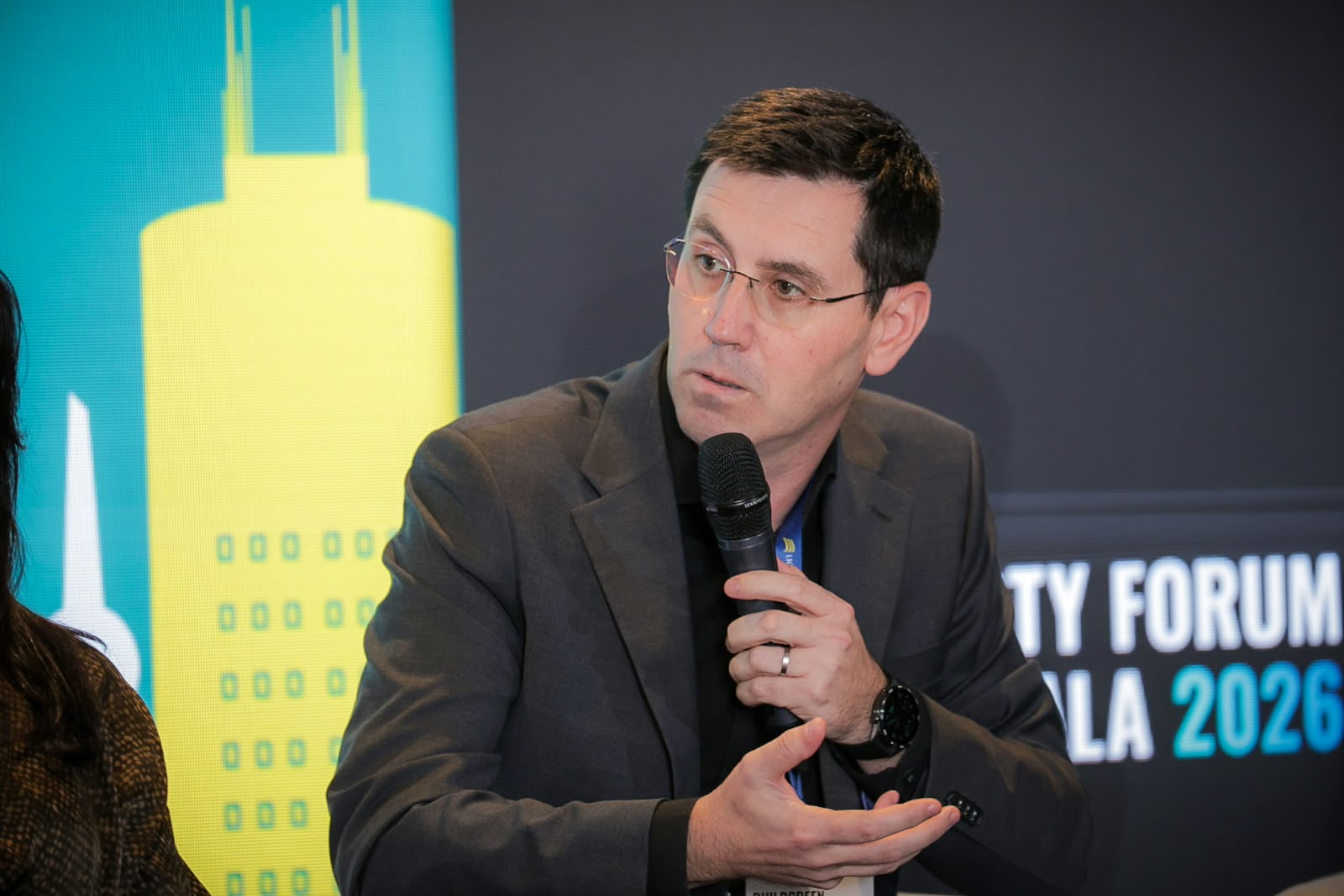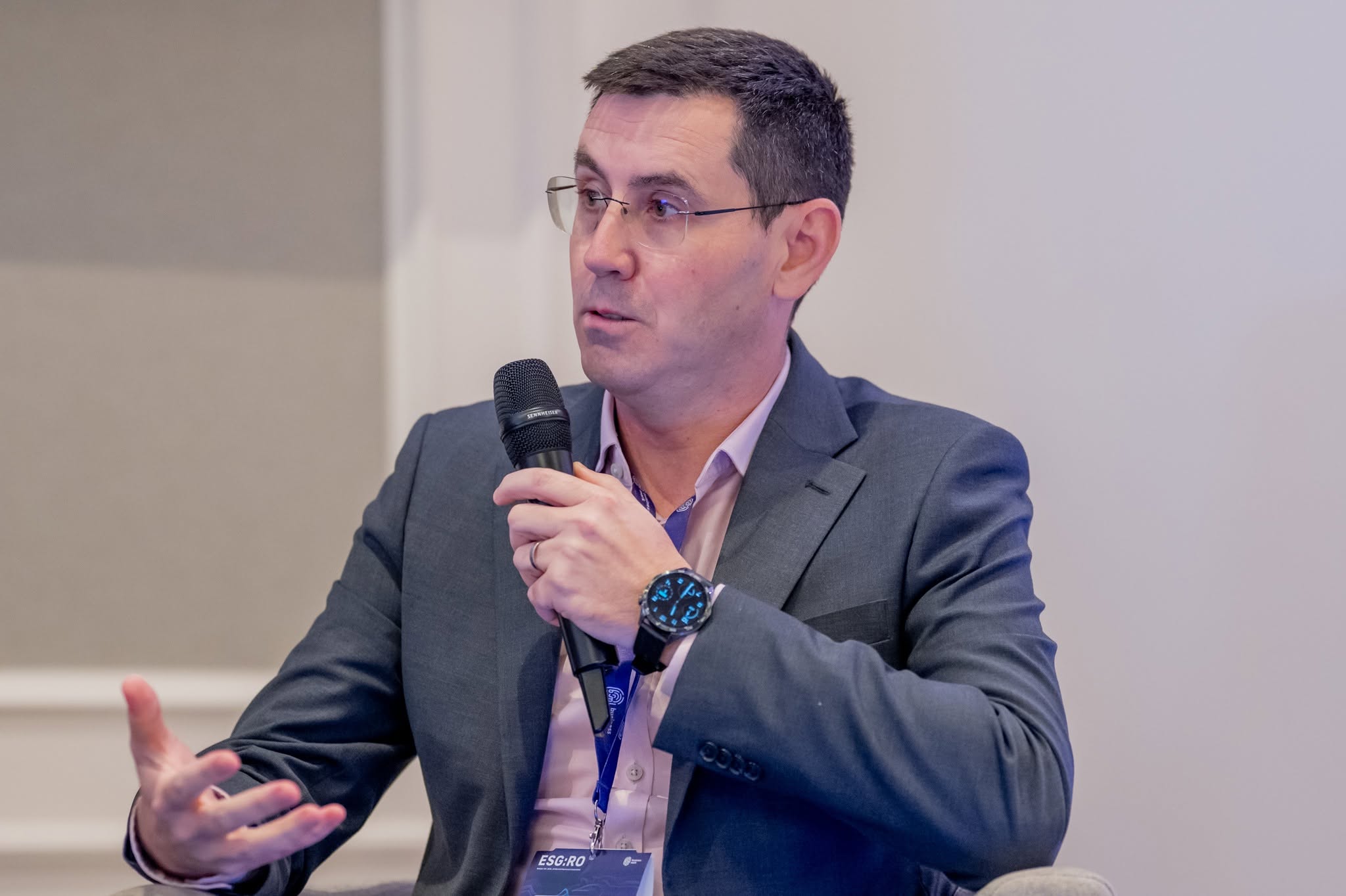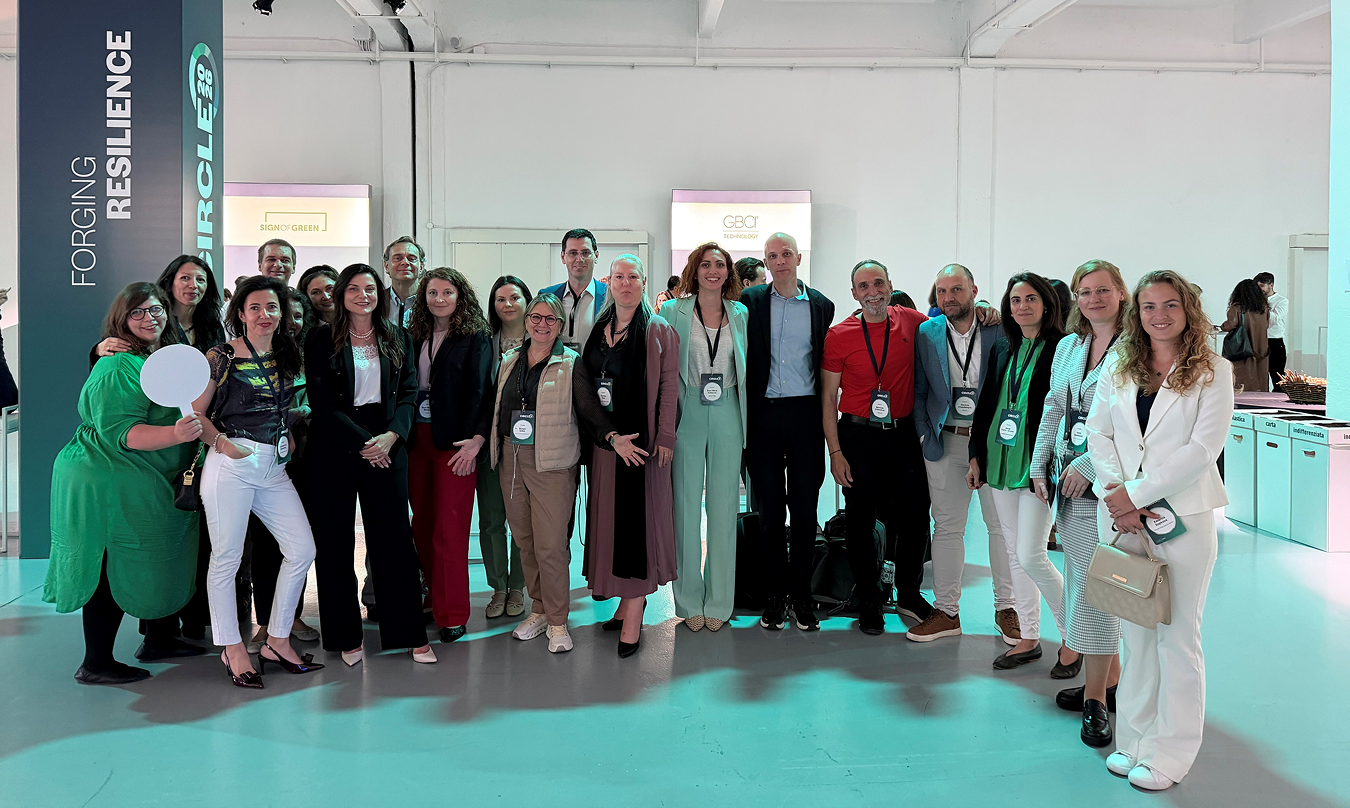
Decarbonisation dominated conversations at GBCI Europe Circle 2026 in Milan, where Răzvan Nica, CEO and Co-Founder of BuildGreen, joined over 350 green building professionals from across Europe. Decarbonisation emerged as a central concern, not as an abstract ambition, but as a concrete challenge for developers, material suppliers and end users alike.
Suppliers are moving. Developers must follow
One of the clearest signals from Milan was the growing engagement of major building material manufacturers. Companies such as Saint-Gobain, Knauf and Etex were not only present but actively showcasing decarbonisation solutions. The focus extended beyond operational carbon to embodied carbon, i.e. the emissions generated during material production itself.
According to Concrete Sustainability Council data, leading cement producers are already eliminating gas from production processes, replacing it with waste combustion systems. The carbon footprint of today's cement is measurably lower than two years ago and the trajectory continues downward. "It is a natural evolution", said Răzvan Nica. "The supply chain is already improving. The question is whether procurement decisions are keeping pace."
This innovation cycle means that developers who select materials based on sustainability criteria rather than price alone are already benefiting from lower embodied carbon without additional effort. The supply chain is advancing. The question is whether procurement decisions are keeping pace.
The developer's responsibility
Some developers, particularly in the residential sector, cite the difficulty of sourcing materials that meet high sustainability standards as a barrier to green certification. Răzvan Nica challenges this framing directly. The problem is not a lack of supply, but a lack of demand-side pressure.
"Developers should be selecting suppliers on sustainability criteria, not just price. If you have two products with similar performance and similar cost, and one is more sustainable, choose it. That choice signals to the market what is valued."
The analogy with the office market is instructive. Green standards were adopted by the segment not through regulatory mandate alone, but because tenants demanded it, investors required it and the market rewarded it. The same dynamic is available in residential, but it requires developers to exercise it.
Is Romania resigned or ready?
Across Europe, residential buyers remain more focused on energy efficiency and maintenance costs than on broader decarbonisation metrics. Compared to Western European markets, Romanian homeowners tend to absorb utility costs with resignation rather than proactive investment. In markets like Germany or the Netherlands, energy costs drive renovation decisions and create sustained demand for higher-performance solutions. In Romania, the relationship between ownership and improvement remains less dynamic, a structural challenge for the broader transition.
The existing building stock is where the real challenge lies. New buildings are already subject to stronger performance requirements. It is the pre-2010 buildings, which represent the majority of Romania's built environment, where decarbonisation efforts will have the greatest impact and where both developer initiative and supply chain quality matter most.