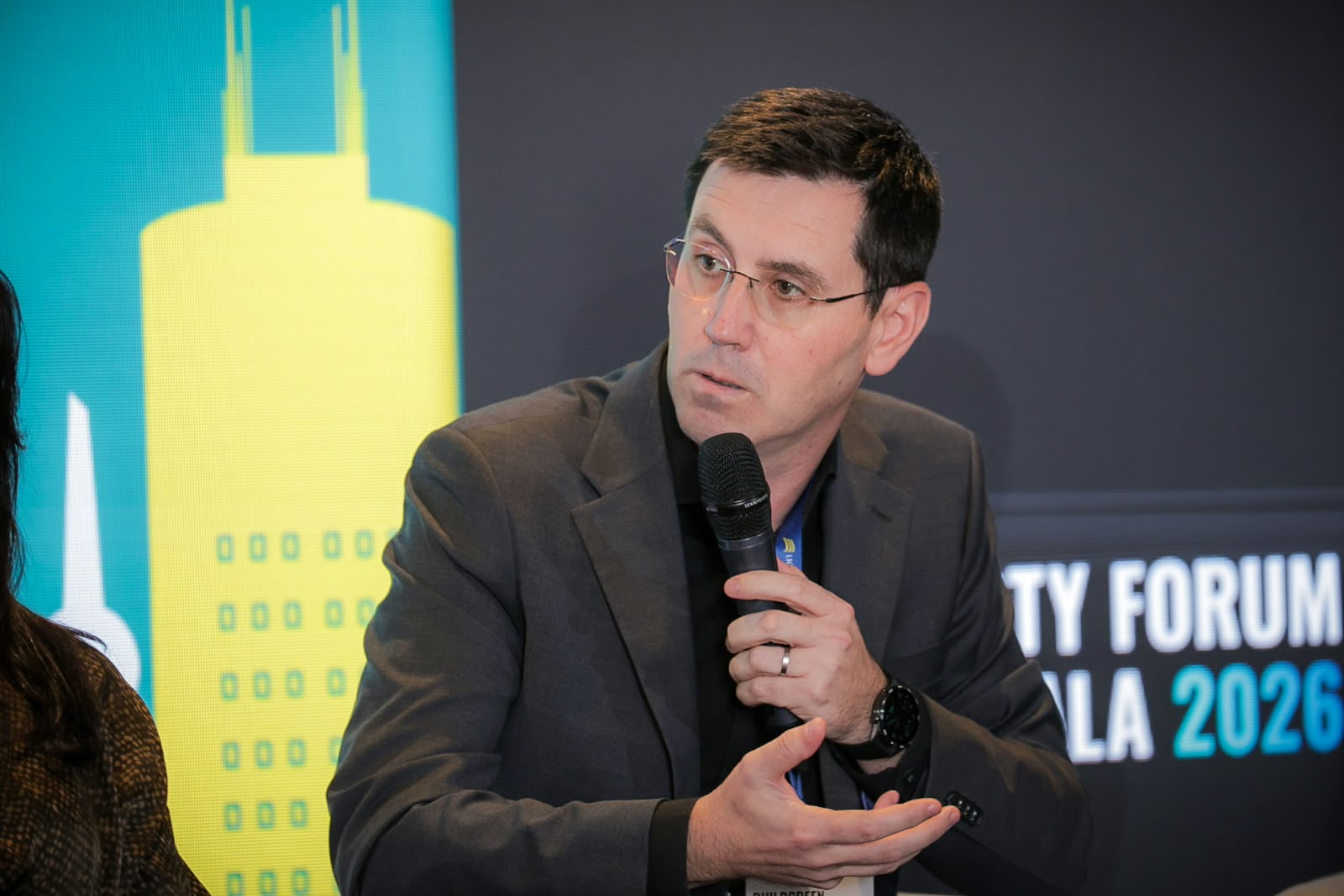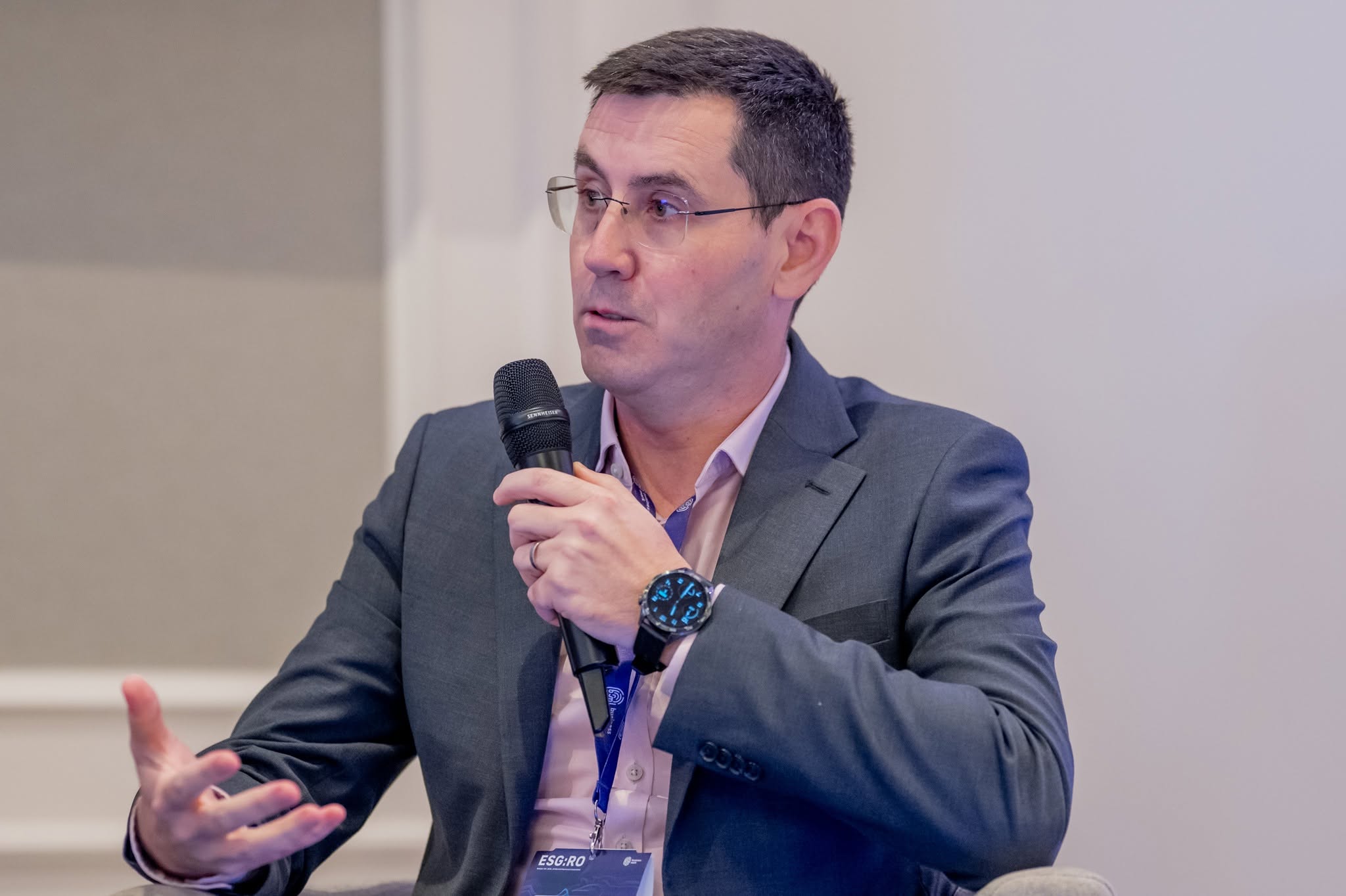
On 30 March, Răzvan Nica, CEO and Founder of BuildGreen and CarbonTool, took part in Panel II of the Ziarul Financiar conference “Trends in the Office and Construction Market – The New Normal: Bucharest Builds Again”, alongside senior leaders from Globalworth Romania, One United Properties, Speedwell, nHood and Cushman & Wakefield.
The panel focused on the office market beyond 2026 – new supply, vacancy, hybrid work, investment flows and the role of ESG as a genuine performance criterion. Răzvan’s contribution addressed the shift in how sustainability is understood and applied in the built environment and what that means for developers, asset managers and tenants navigating a more demanding market.
From certification goal to project outcome
One of the central arguments Răzvan Nica made during the panel reflects 15 years of BuildGreen’s experience: green certification is no longer a goal in itself. Five or six years ago, certification was driven primarily by marketing requirements or by conditions attached to international financing. Today, it has become a consequence of how a project is designed and operated.
The shift was accelerated by the energy crisis that followed the conflict in Ukraine. Buildings that had incorporated sustainability requirements, even if initially for formal or reputational reasons, proved their value when energy costs rose sharply. Those buildings performed significantly better than comparable assets that had not been built to the same standards. The market learned, in real time, what performance actually means.
The shared responsibility of owners and tenants
A key point Răzvan Nica raised is the structural tension in office sustainability: owners invest in building performance, but the operational benefits, such as lower energy bills, reduced consumption, largely flow to tenants. This misalignment is something the market is increasingly working to address.
The Green Lease concept is one response. Under this framework, both parties assume obligations toward improving performance, not just in the building’s common areas, but within the tenant’s own occupied space. A technically well-designed building can still underperform if its users do not operate it correctly. Shared objectives require shared accountability.
Certification plays a role here too. BREEAM and LEED certifications for new buildings, energy performance certificates and operational certifications, which measure how a building actually performs in use, not just at handover, all provide a framework for this shared commitment. The carbon footprint reduction that both owner and tenant report at year end is a joint result. It does not belong to one party alone.
A market that has grown up
Bucharest’s office market is entering a new cycle. After two years with no significant new supply, over 100,000 sq m are in the pipeline. In this context, the buildings that will attract and retain tenants are those that can demonstrate performance — on energy, on comfort, on cost predictability. Sustainability is no longer a differentiator for the few. It is the baseline for the competitive.