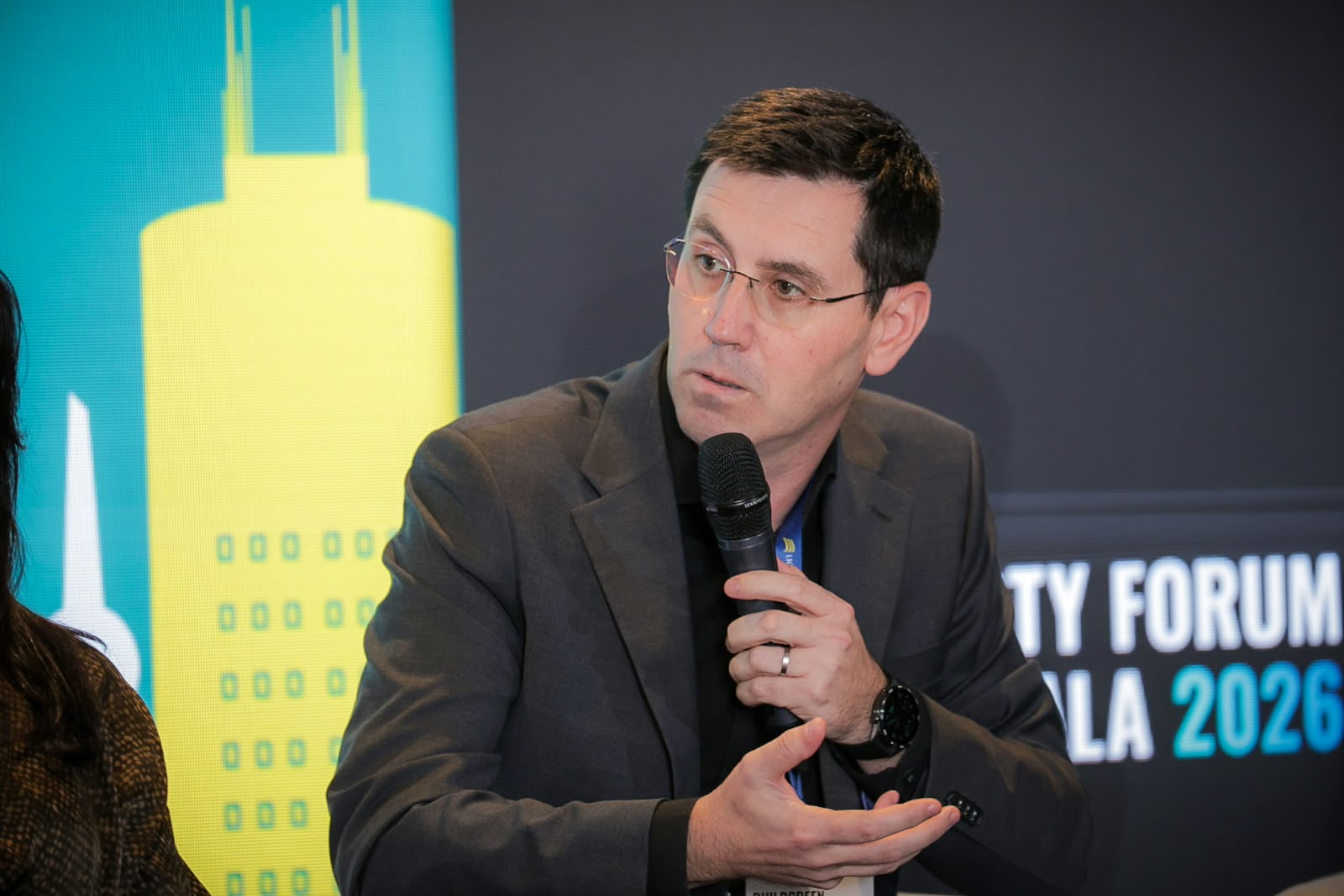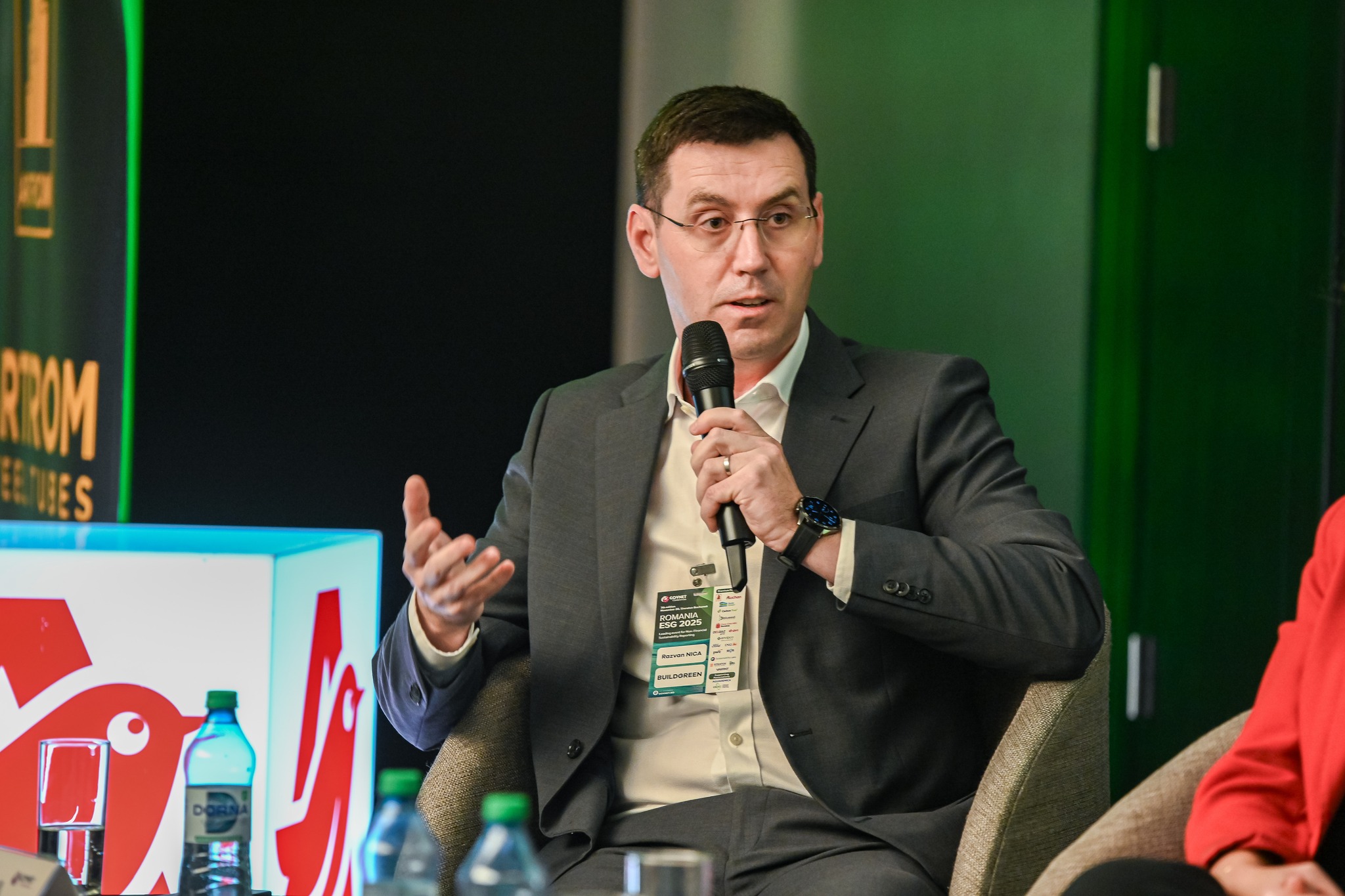
On 20 November 2025, Răzvan Nica, CEO and Founder of BuildGreen, joined the 7th annual edition of ESG 2025 Non Financial Sustainability Reporting, organised by GovNet. His message to issuers, investors and developers was clear: real decarbonisation in the built environment will not come from reports alone, but from how we design, reuse and operate buildings over their full lifecycle.
Existing buildings: We can’t turn back time
Speaking about the decarbonisation of the existing building stock, Răzvan underlined a simple reality: “We cannot turn back time, but the most important thing is not to demolish buildings. We should reuse them, convert them, adapt them to new needs.”
Instead of seeing ageing assets as stranded, he argued that adaptive reuse must become the default option. Conversions to new functions from offices to hotels, schools, healthcare or mixed-use should be anticipated as early as the initial design stage.
“Today, design needs to take into account potential functional reconversions,” he explained. “Not just ‘we are designing an office building only for office use’. The area might require different functions in the future, a hotel, a school, a hospital. These possibilities should be considered from the moment we build.”
This long-term, flexible mindset is essential if investors want to reduce embodied carbon, protect value and avoid the environmental and financial cost of demolition.
From compliance to market-driven performance
Răzvan also highlighted a shift from pure compliance to genuine market pressure for better performance. Sustainability requirements no longer come only from CSR or non-financial reporting regulations, but increasingly from tenants, buyers and investors.
“We are not just talking about an obligation to report,” Răzvan Nica noted. “We are talking about a demand from the market for a certain level of performance in construction.”
This demand is reshaping supply chains. Building material manufacturers are moving fast to reduce the embodied carbon of their products. Steel in Europe is already largely recycled, and the cement industry is taking steps to decarbonise, even if the road to truly low-carbon concrete is still long. “We cannot expect zero-carbon concrete tomorrow,” Răzvan cautioned, “but we see real progress year after year.”
Contractors are under similar pressure. Performance targets and rising cost awareness are pushing construction companies to optimise resource and energy use on site. For Răzvan, this is not only an ESG topic, but also sound business: reducing waste and inefficiencies improves both environmental outcomes and margins.
Structure and embodied carbon: the big lever
During the discussion, he reminded the audience that structural elements typically account for more than 50% of a building’s embodied carbon. That means decisions about structural systems, materials and design efficiency are among the most powerful levers for reducing lifecycle impact.
As material suppliers bring to market lower-carbon options, developers and designers need robust methodologies to assess trade-offs and document improvements, an area where BuildGreen’s advisory and certification expertise is increasingly in demand.
Raising the bar at permitting stage
Looking ahead, Răzvan pointed to the need for regulation to better reflect these realities. One of the ideas he supported is tying building permits more closely to sustainability performance.
He referred to the potential “obligation that, in order to obtain the building permit, the project is accompanied by a green building precertification.” In practice, such a requirement would ensure that ESG criteria and energy performance are embedded from day one, not retrofitted later as an afterthought or treated as a mere reporting exercise.